
Salah Abdeslam possessed documents about Juelich Nuclear Research Centre located near the Belgium-Germany border and being used for the storage of atomic waste, Redaktions Netzwerk Deutschland media group reported.

Satisfied with the outcome of the Nuclear Security Summit, which vowed to lock down all nuclear materials in four years and prevent terrorist groups from laying a hand on it, United States President Barack Obama on Tuesday said the world will be a more secure place now. "We have seized this opportunity, and because of the steps we've taken -- as individual nations and as an international community - the American people will be safer and world will be more secure," Obama said

If Xi Jinping can establish control over the PLA Ground Force, relations between India and China will settle down to an even keel. The next few weeks will show whether Xi has finally succeeded in gaining control over the PLA Ground Force. That could bring about the substantive shift in India-China relations that both our leaders have been working for, observes Ambassador Prabhat Shukla.

Leaders of the two countries, however, did discuss on Pakistan's nuclear safety and security which is an ongoing discussion.

This comes despite Russia on Monday stating that Lavrov and Rubio held a "constructive" conversation as part of preparations for the meeting between their two presidents in Budapest, Hungary, Russian media has reported.
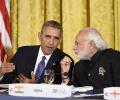
The PM said that while terrorists are using 21st century technology, our responses are rooted in the past.

Trump also praised Chinese President as "a great leader of a great country" and said the two sides had "already agreed to a lot of things."
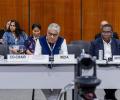
India will publish its revised Nationally Determined Contribution (NDC) for the 2035 period by December, Environment Minister Bhupender Yadav said on Monday, while urging developed nations to achieve net zero targets ahead of their current timelines.

Stressing that wars are "very bad", Trump said that he seems to have "an ability to end them, to get people together" for which he uses the "power of the United States".
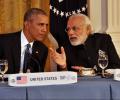
After the three bilateral meetings, Modi would participate in the three separate sessions of the Nuclear Security Summit, which kicked off with a White House dinner on Thursday night.
US President Barack Obama will meet Prime Minister Manmohan Singh and Pakistani Premier Syed Yusuf Raza Gilani on the sidelines of the Nuclear Security Summit in Washington, the White House said on Tuesday.

Interview with strategic analyst C Raja Mohan on the recent Nuclear Summit in the US
"We are considering setting up of a nuclear security Centre of Excellence in China through cooperation with relevant countries in order to play a bigger role in regional nuclear security cooperation," Hu said in his remarks at the Nuclear Security Summit.

United States President Donald Trump on Tuesday said 'we' now have 'complete and total control of the skies over Iran' and 'we know exactly where the so-called 'Supreme Leader' is hiding'.

Modi will embark on a three-nation tour beginning March 30 during which he will attend the crucial Nuclear Security Summit in Washington, India-EU Summit in Brussels and travel to Saudi Arabia, a key partner of India in the sensitive Gulf region.

He said Pakistan was working with the international community to ensure the security of its nuclear installations, which were always in safe hands.
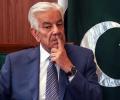
The entry of other Arab countries in the mutual defence deal between Pakistan and Saudi Arabia is not ruled out, Defence Minister Khawaja Asif has said, adding that 'doors are not closed' for such developments.
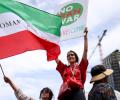
China and Russia on Sunday strongly condemned the United States air strikes on Iranian nuclear facilities, with China calling it a serious violation of the United Nations Charter that heightens tensions in West Asia, and Russia terming the strikes 'irresponsible' and asserting that they grossly violate international law, the UN Charter, and UN Security Council resolutions.

Dar recalled that when he met US Secretary of State Marco Rubio in July and asked about dialogue with India, the top US diplomat clarified that India has maintained it is a "bilateral issue."
India is determined that its expanded nuclear power programme will follow the highest standards of nuclear safety and security, Prime Minister Manmohan Singh said while addressing the Nuclear Security Summit in Seoul on Tuesday.
India, a founding member of the Non-Aligned Movement, was not invited to a luncheon meeting hosted by United States Vice President Joe Biden, where he professed that the grouping and his country had similar goals on nuclear security and non-proliferation.

Modi held talks with Abe after arriving in the Laotian capital to attend the Association of Southeast Asian Nations-India and the East Asia summits that will take place on Thursday.

'...it should not delude itself into thinking that India's security or its great-power ambitions will be advanced by those partnerships.'
'Instead, what India should focus on is on riding out the next three-and-a-half years of Trump's presidency with minimal damage to itself.'
As he prepares to embark on a visit to the US on Saturday to participate in the Nuclear Security Summit, Prime Minister Manmohan Singh said on Friday that nuclear terrorism and proliferation of sensitive technologies are "legitimate concerns" which require "firm responses".
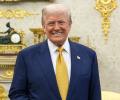
Trump, who has repeatedly said that he stopped the conflict between India and Pakistan through trade, last Friday said for the first time that "five jets were shot down" during the fighting.
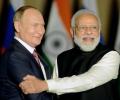
US officials say that outreach and public statements from Modi and others helped avert a crisis.
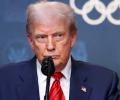
India and the US have collaborated through the past one month on launching a powerful satellite; are commencing joint production of GE Aerospace's F414 jet engines in India; India is participating in a massive three week-long military exercise in the Western Pacific, observes Ambassador M K Bhadrakumar.

India-US relations, like Rome, were not built in a day, nor can they be demolished in a day.
All said and done, when the new global order emerges, India can only remain with the democracies, asserts Ambassador T P Sreenivasan.

Pakistan is growing restive with the below the radar screen diplomacy. This is the issue Modi and Sharif will grapple with at their Washington meeting, says Rajeev Sharma.

The formulations in the declaration in reference to terrorism is going to be to our "satisfaction", Dammu Ravi, secretary (economic relations) in the external affairs ministry said on Monday.

Whether Trump will actually press ahead with the oil sanctions remains unclear, since keeping Russian oil out of the world market risks high oil prices which could boomerang on the US economy and be damaging politically for Trump, points out Ambassador M K Bhadrakumar.
Leading South Asia analysts in the United States have slammed President Obama for his stout defense of Islamabad as committed to non-proliferation and a safe steward of its nuclear weapons arsenal, and described his comparing the safety and security of US and Pakistan nuclear weapons is "unhelpful and disingenuous".

United States President Barack Obama has assured Pakistan Prime Minister Yousuf Raza Gilani that Washington has no plans to control Islamabad's nuclear programme.
Taking cognisance of the threat of nuclear terrorism, 47 countries, including India, have vowed to prevent non-state actors from obtaining information or atomic technology and effectively cooperate globally to advance security in the field.
The communique issued at the end of the Summit, which saw the participation of 47 countries constitutes a political commitment by the participating countries on a "voluntary basis" the actionable portions of this work plan.
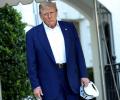
United States President Donald Trump has expressed strong disapproval of Israel and Iran 'violating the ceasefire' he announced earlier in the day and said the two countries have been fighting 'so long and so hard that they don't know what the f*** they're doing'.
The prime ministers of India and Pakistan may have 'a brief encounter' in Washington on the sidelines of the April 12-13 Nuclear Security Summit, though proper talks between them are more likely during a South Asian Association for Regional Cooperation meet in Bhutan in April, a media report said on Saturday. The United States administration would prefer to arrange a proper meeting between the two prime ministers on the margins of the nuclear summit next week.

The BRICS nations condemned the Pahalgam terror attack, advocated for a zero-tolerance approach to terrorism, and criticized rising tariffs during their summit in Rio de Janeiro. They also addressed global challenges and called for reforms in international institutions.
Amid global concerns over Pakistan's track record on nuclear non-proliferation, Prime Minister Yusuf Raza Gilani on Monday said his country had no links with North Korea's atomic programme.
Describing India's non-proliferation record as "solid", the United States has asked all nuclear-capable states to exercise restraint regarding their atomic capabilities.
